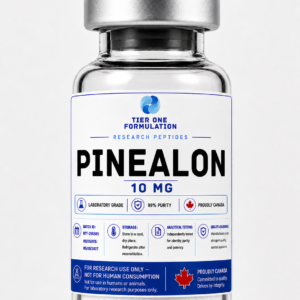
Epithalon Canada: Epitalon 10mg Research Overview
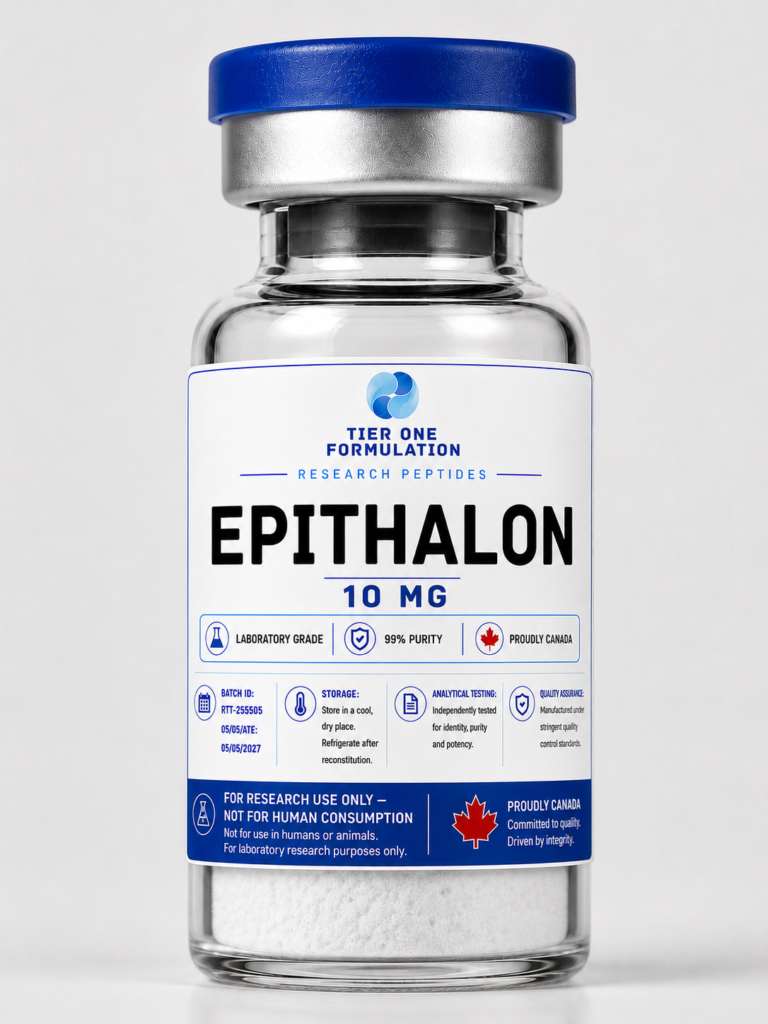
Epithalon 10mg — also written as Epitalon in the literature — is supplied in Canada for laboratory research on the tetrapeptide Ala-Glu-Asp-Gly. Studies have examined telomerase-related activity, cellular-aging models and short-peptide regulatory hypotheses. The literature is comparatively limited and heterogeneous, so preliminary findings should not be presented as established longevity or anti-aging outcomes.
Quick Research Profile
| Material |
Epithalon / Epitalon (AEDG) |
| Strength |
10mg |
| Research classification |
Synthetic tetrapeptide Ala-Glu-Asp-Gly |
| Primary research pathways |
Short-peptide gene-regulation, telomerase and cellular-aging research |
| Literature status |
Mostly preclinical and small/older research programs; independent human evidence is limited |
| Intended use |
Laboratory research only — not for human or veterinary use |
Epithalon / Epitalon Tetrapeptide Research Context
Experimental studies have reported interactions between short peptides and cellular regulatory processes, including gene-expression and telomerase-related observations. A frequently cited study reported increased telomerase activity and telomere elongation in cultured human somatic cells. These findings are experimental and do not establish an anti-aging therapy.
Key Epithalon / Epitalon Research Areas
- Short-peptide biology: AEDG is studied as a small regulatory peptide sequence.
- Telomerase and telomere research: Cell-culture work has examined telomerase activity and telomere-associated endpoints.
- Gene-expression research: Some publications explore interactions between short peptides, DNA and transcription-related processes.
Evidence Quality and Interpretation
The Epithalon literature includes cell and animal studies and a smaller body of older human research. Much of the work comes from a limited group of investigators, so independent replication and study quality should be considered when evaluating claims.
Research Limitations and Responsible Interpretation
Evidence remains insufficient for broad claims about lifespan, rejuvenation or human anti-aging effects. Findings are model-specific and should be described as preliminary research observations.
Published findings describe specific experimental preparations and study conditions. They do not establish that a commercial research material is equivalent to a regulated pharmaceutical product, and they should not be interpreted as evidence of safety, efficacy or suitability for personal use.
Scientific References
References are provided for scientific context. Researchers should review the original methods, material identity, model and limitations before using published findings to inform experimental design.
Research FAQ: Epithalon / Epitalon (AEDG)
Are Epithalon and Epitalon the same search term?
Both spellings are used in discussions of the Ala-Glu-Asp-Gly tetrapeptide. This page uses Epithalon as the product name while including Epitalon as a literature and search variant.
Why is telomerase discussed in Epithalon research?
Some experimental studies have reported telomerase-related activity and telomere changes in specific cell models. These findings are preliminary and should not be generalized into longevity claims.
How mature is the Epithalon evidence base?
The literature is relatively limited, heterogeneous and concentrated compared with better-established signalling peptides. Independent human validation remains insufficient for broad clinical conclusions.
Is Epithalon 10mg marketed as an anti-aging product?
No. It is supplied for laboratory research only and is not presented for anti-aging, longevity, treatment or personal use.
Canadian Research Procurement
Tier One supplies Epithalon 10mg for qualified Canadian research procurement. Laboratories studying mitochondrial signalling, redox biology and cellular metabolism can browse the Mitochondrial Peptides collection for related research materials. Product-specific identity, purity and analytical statements should be confirmed from current batch documentation. For research purposes only. Not for human or veterinary use or consumption.