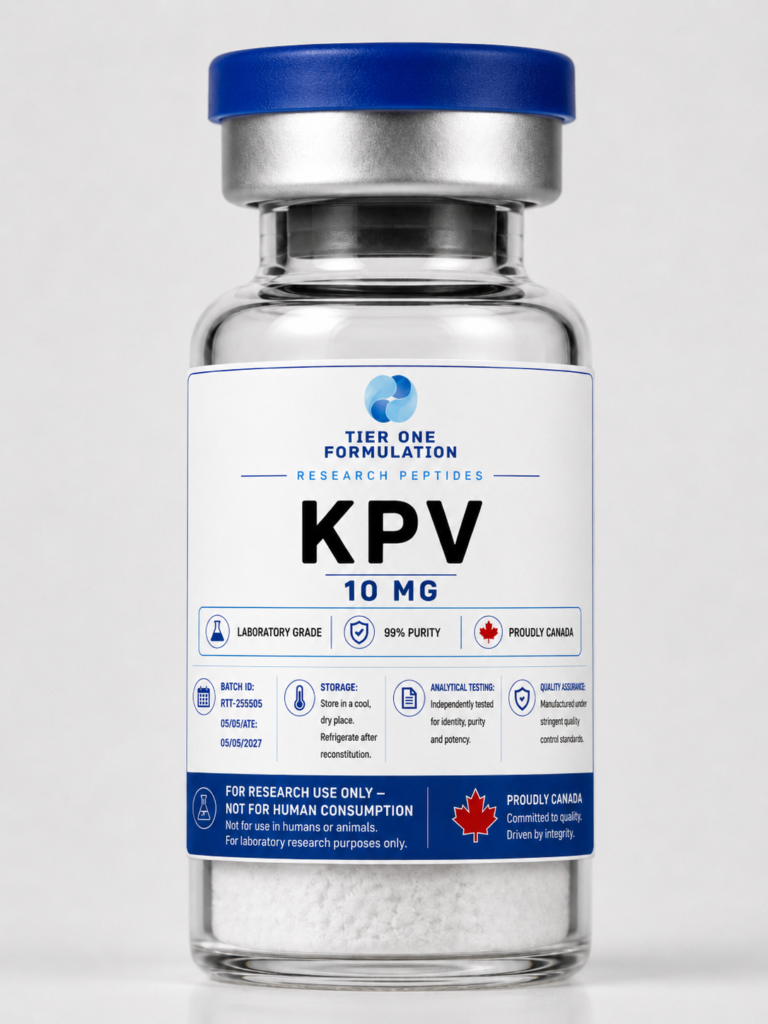
KPV Peptide Canada: 10mg Research Overview
KPV 10mg is supplied in Canada for laboratory research on the Lys-Pro-Val tripeptide corresponding to the C-terminal sequence of α-melanocyte-stimulating hormone (α-MSH). Preclinical studies have examined intestinal transport through PepT1 and melanocortin-derived inflammatory-signalling effects. KPV remains a research peptide with limited clinical translation, so model-specific results should be kept distinct from therapeutic claims.
Quick Research Profile
| Material |
KPV (Lys-Pro-Val) |
| Strength |
10mg |
| Research classification |
C-terminal α-MSH-derived tripeptide |
| Primary research pathways |
Melanocortin-derived inflammatory signalling, epithelial and PepT1-related research |
| Literature status |
Preclinical cell and animal literature; human evidence is limited |
| Intended use |
Laboratory research only — not for human or veterinary use |
KPV, PepT1 Transport and Melanocortin-Derived Signalling
The KPV literature includes experiments on inflammatory mediator production, epithelial responses and intestinal peptide transport. Some work implicates uptake through the PepT1 oligopeptide transporter in intestinal models, while other studies examine anti-inflammatory effects that may not require classical melanocortin receptor signalling.
Key KPV Research Areas
- Inflammatory-signalling research: Preclinical models examine cytokine and inflammatory-cell responses.
- Epithelial and intestinal models: KPV has been investigated in cell and animal models of intestinal inflammation.
- Peptide transport: PepT1-mediated uptake is an established research topic for KPV in intestinal systems.
Evidence Quality and Interpretation
The evidence base is primarily experimental and preclinical. Results in mouse, rat or cultured-cell models do not establish clinical efficacy, and mechanisms remain context-dependent.
Research Limitations and Responsible Interpretation
KPV should not be promoted as a treatment for inflammatory or gastrointestinal disease. Research findings require model-specific interpretation and independent characterization of the material used.
Published findings describe specific experimental preparations and study conditions. They do not establish that a commercial research material is equivalent to a regulated pharmaceutical product, and they should not be interpreted as evidence of safety, efficacy or suitability for personal use.
Scientific References
References are provided for scientific context. Researchers should review the original methods, material identity, model and limitations before using published findings to inform experimental design.
Research FAQ: KPV (Lys-Pro-Val)
What does KPV stand for?
KPV is the tripeptide Lys-Pro-Val, corresponding to the C-terminal sequence of α-melanocyte-stimulating hormone.
Why is PepT1 discussed in KPV research?
Preclinical intestinal models have examined peptide transporter 1 (PepT1) as a route for KPV uptake, providing a mechanistic framework for some inflammation-related experiments.
How strong is the evidence for KPV?
The most relevant evidence remains preclinical, including cell and animal models. Human therapeutic efficacy and safety are not established by this research literature.
Is KPV 10mg presented for inflammatory conditions?
No. Tier One supplies it for laboratory research only and makes no treatment, healing or human-use claim.
Canadian Research Procurement
Tier One supplies KPV 10mg for qualified Canadian research procurement. Laboratories comparing tissue-remodelling, peptide-signalling and related preclinical materials can review the Repair & Recovery Peptides collection for additional research products. Product-specific identity, purity and analytical statements should be verified against the current batch documentation available for the material. For research purposes only. Not for human or veterinary use or consumption.