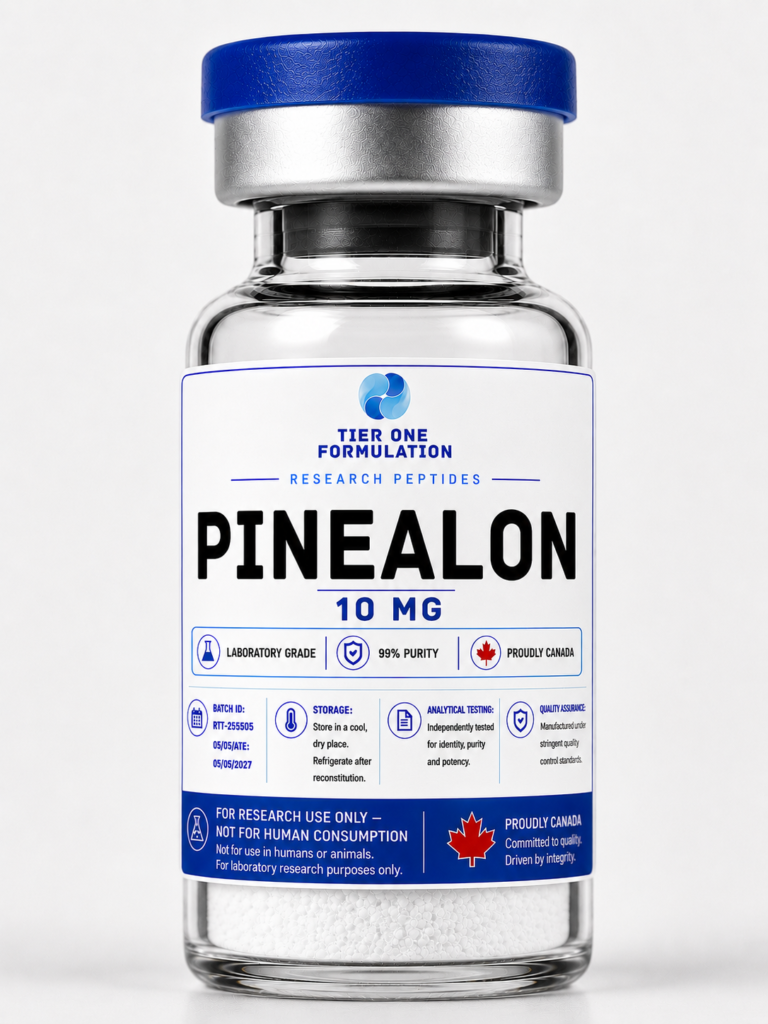
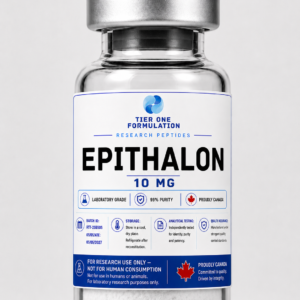
Pinealon Canada: 10mg EDR Research Peptide Overview
Pinealon 10mg is supplied in Canada for laboratory research on the short regulatory tripeptide Glu-Asp-Arg (EDR). Preclinical publications have explored oxidative-stress models, cell viability and hypotheses involving peptide-DNA interaction or gene-expression regulation. Compared with more established peptide systems, the Pinealon evidence base is small and concentrated, so conclusions should remain conservative.
Quick Research Profile
| Material |
Pinealon / EDR peptide |
| Strength |
10mg |
| Research classification |
Synthetic tripeptide Glu-Asp-Arg |
| Primary research pathways |
Short-peptide gene-expression, oxidative-stress and neurobiology research |
| Literature status |
Primarily preclinical and limited regional literature; independent replication is limited |
| Intended use |
Laboratory research only — not for human or veterinary use |
EDR Tripeptide Research, Oxidative Stress and Gene Regulation
Experimental work has reported effects on reactive-oxygen-species accumulation and cell viability under oxidative stress, while other publications examine peptide-DNA interactions and gene-expression hypotheses. The proposed mechanisms are not fully established and require independent confirmation.
Key Pinealon / EDR peptide Research Areas
- Oxidative-stress research: Cell models have examined ROS accumulation and viability under induced stress.
- Short-peptide gene regulation: Studies investigate possible interactions of EDR with DNA and transcription-related processes.
- Neurobiology models: Animal and cell research has explored neuronal and cognition-related endpoints.
Evidence Quality and Interpretation
Pinealon has a modest literature base compared with well-established signalling peptides. Much of the evidence is preclinical and comes from a relatively concentrated group of investigators.
Research Limitations and Responsible Interpretation
Claims about cognition, neuroprotection or aging should remain preliminary. Human effectiveness and safety are not established by the available research.
Published findings describe specific experimental preparations and study conditions. They do not establish that a commercial research material is equivalent to a regulated pharmaceutical product, and they should not be interpreted as evidence of safety, efficacy or suitability for personal use.
Scientific References
References are provided for scientific context. Researchers should review the original methods, material identity, model and limitations before using published findings to inform experimental design.
Research FAQ: Pinealon / EDR peptide
What is the EDR sequence associated with Pinealon?
Pinealon is commonly described as the tripeptide Glu-Asp-Arg, abbreviated EDR.
What has Pinealon research examined?
Published preclinical work includes oxidative-stress models, cell viability and proposed short-peptide effects on gene regulation or peptide-DNA interactions.
How robust is the Pinealon evidence base?
It is relatively small and concentrated compared with major receptor-targeted peptide fields. Independent replication and human evidence are limited.
Does this listing claim neuroprotection or cognitive benefits?
No. Pinealon 10mg is supplied only for laboratory research, and preliminary model findings are not presented as clinical outcomes.
Canadian Research Procurement
Tier One supplies Pinealon 10mg for qualified Canadian research procurement. Laboratories studying mitochondrial signalling, redox biology and cellular metabolism can browse the Mitochondrial Peptides collection for related research materials. Product-specific identity, purity and analytical statements should be confirmed from current batch documentation. For research purposes only. Not for human or veterinary use or consumption.