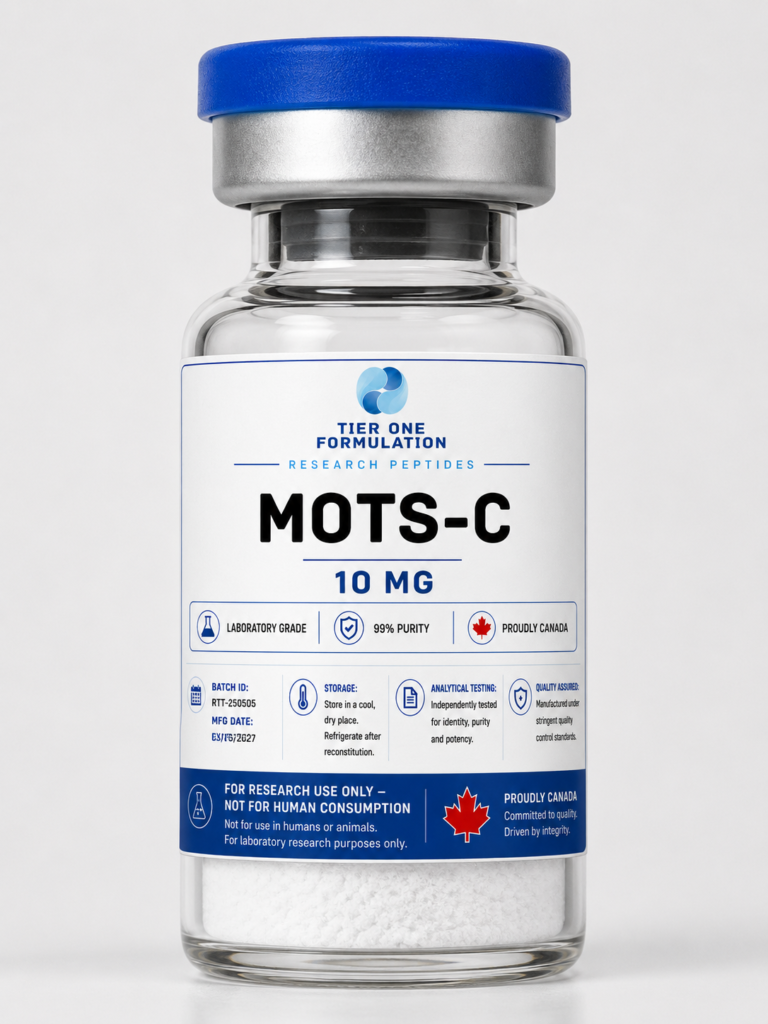
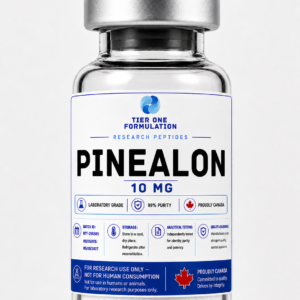
MOTS-C 10mg Canada: Mitochondrial Peptide Research
MOTS-C 10mg is supplied in Canada for research on a 16-amino-acid mitochondrial-derived peptide encoded within the mitochondrial 12S rRNA region. MOTS-C became notable as a model of mitochondrial-to-nuclear communication because experimental work links it with cellular stress responses, metabolic signalling and stress-dependent nuclear activity. The 10mg listing is intended for qualified laboratory procurement, not personal use.
Quick Research Profile
| Material |
MOTS-C |
| Strength |
10mg |
| Research classification |
16-amino-acid mitochondrial-derived peptide |
| Primary research pathways |
Mitochondrial signalling, metabolic stress, AMPK-associated and nuclear gene-response research |
| Literature status |
Preclinical and mechanistic literature with an expanding mitochondrial-derived peptide research base |
| Intended use |
Laboratory research only — not for human or veterinary use |
Mitochondrial Encoding, Stress Signalling and AMPK Research
Research indicates that MOTS-C can participate in metabolic signalling and, under stress conditions, may translocate to the nucleus and influence nuclear gene expression. Experimental work has linked MOTS-C with the methionine-folate cycle, AICAR accumulation and AMPK-associated signalling. These pathways are active areas of mechanistic research rather than established therapeutic outcomes.
Key MOTS-C Research Areas
- Mitochondrial signalling: MOTS-C is studied as a mitochondria-derived signalling peptide.
- Metabolic homeostasis: Cell and animal models have examined glucose handling, insulin-sensitivity-related endpoints and energy balance.
- Stress-response biology: Research explores nuclear translocation, AMPK-associated pathways and cellular adaptation to metabolic stress.
Evidence Quality and Interpretation
Foundational MOTS-C publications are predominantly cell and animal studies. Reviews describe a growing research field, but translational and human evidence remains much more limited than the preclinical literature.
Research Limitations and Responsible Interpretation
Results from metabolic or disease models do not establish human efficacy or safety. Research conclusions depend on model, species, experimental design and material characterization.
Published findings describe specific experimental preparations and study conditions. They do not establish that a commercial research material is equivalent to a regulated pharmaceutical product, and they should not be interpreted as evidence of safety, efficacy or suitability for personal use.
Scientific References
References are provided for scientific context. Researchers should review the original methods, material identity, model and limitations before using published findings to inform experimental design.
Research FAQ: MOTS-C
What makes MOTS-C different from many conventional research peptides?
MOTS-C is encoded within mitochondrial DNA rather than by a conventional nuclear protein-coding gene, making it relevant to research on mitochondrial-derived signalling peptides and organelle-to-nucleus communication.
Which pathways are commonly studied with MOTS-C?
Published research discusses metabolic-stress signalling, the methionine-folate cycle, AICAR accumulation, AMPK-associated pathways and stress-dependent nuclear responses.
How strong is the translational evidence for MOTS-C?
Foundational evidence is dominated by cell and animal studies. Human and translational evidence is much less mature than the mechanistic literature.
How does MOTS-C 10mg differ from the 40mg Tier One listing?
Both products contain the same named research peptide; the difference is the material quantity offered for laboratory procurement. Strength does not create a different MOTS-C mechanism or imply a recommended experimental or human dose.
Canadian Research Procurement
Tier One supplies MOTS-C 10mg for qualified Canadian research procurement. Laboratories studying mitochondrial signalling, redox biology and cellular metabolism can browse the Mitochondrial Peptides collection for related research materials. Product-specific identity, purity and analytical statements should be confirmed from current batch documentation. For research purposes only. Not for human or veterinary use or consumption.