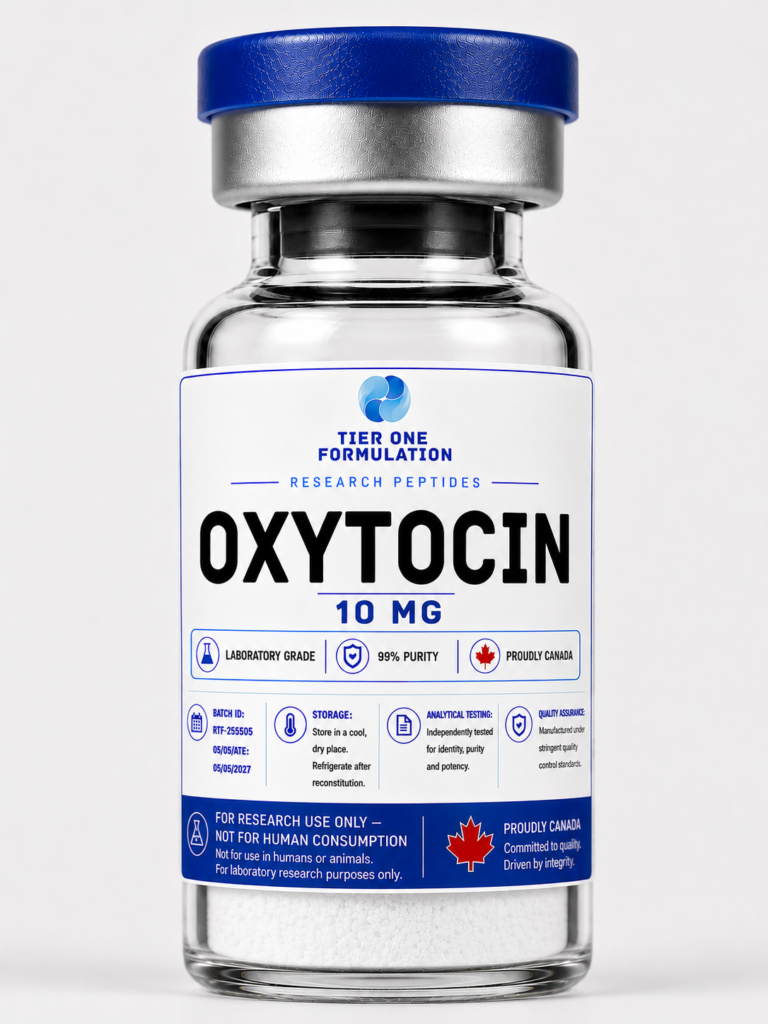
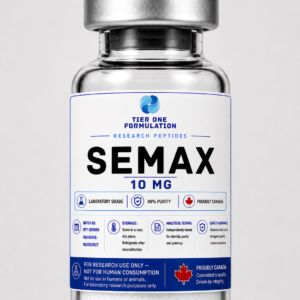
Oxytocin Research Peptide Canada: 10mg Overview
Oxytocin 10mg is supplied in Canada as a research peptide for laboratory investigation of oxytocin-receptor (OXTR) pharmacology and neuroendocrine signalling. OXTR is a G-protein-coupled receptor commonly associated with Gq/11, phospholipase C and intracellular calcium pathways. Oxytocin research spans physiology and behavioural models, but those findings are highly context-dependent and do not support broad consumer or treatment claims.
Quick Research Profile
| Material |
Oxytocin |
| Strength |
10mg |
| Research classification |
Nine-amino-acid neurohypophysial peptide hormone |
| Primary research pathways |
Oxytocin receptor (OXTR), Gq/PLC/calcium and neuroendocrine signalling |
| Literature status |
Extensive receptor, neuroendocrine and behavioural-science literature |
| Intended use |
Laboratory research only — not for human or veterinary use |
OXTR Pharmacology and Gq/PLC/Calcium Signalling
OXTR commonly couples to Gq/11 proteins, activating phospholipase C, intracellular calcium signalling and downstream kinase pathways. Oxytocin research spans receptor pharmacology, reproductive physiology, neural circuits, social-behaviour models and interactions with vasopressin-family signalling.
Key Oxytocin Research Areas
- OXTR receptor pharmacology: Researchers characterize oxytocin binding, receptor activation and signalling bias.
- Neuroendocrine research: Oxytocin is studied as both a peripheral hormone and central neuropeptide.
- Cell-signalling models: Calcium, MAPK and related pathways are examined downstream of OXTR activation.
Evidence Quality and Interpretation
The oxytocin system is extensively studied in animals and humans. Human literature often receives broad public interpretation, but many behavioural findings are context-dependent and should not be generalized.
Research Limitations and Responsible Interpretation
This research material is not presented for labour, lactation, psychiatric, social or other human-use purposes. No behavioural or therapeutic outcome is claimed.
Published findings describe specific experimental preparations and study conditions. They do not establish that a commercial research material is equivalent to a regulated pharmaceutical product, and they should not be interpreted as evidence of safety, efficacy or suitability for personal use.
Scientific References
References are provided for scientific context. Researchers should review the original methods, material identity, model and limitations before using published findings to inform experimental design.
Research FAQ: Oxytocin
What is OXTR?
OXTR is the oxytocin receptor, a G-protein-coupled receptor commonly linked to Gq/11, phospholipase C activation and intracellular calcium signalling.
Why are oxytocin behavioural findings difficult to generalize?
Oxytocin effects can vary with species, experimental design, context, receptor distribution and endpoint. Individual behavioural findings should therefore not be treated as universal outcomes.
What research areas use oxytocin as a model peptide?
The literature includes receptor pharmacology, neuroendocrine signalling, reproductive physiology and neural-circuit or behavioural models.
Is Oxytocin 10mg intended for obstetric, psychiatric or personal use?
No. It is supplied strictly for laboratory research and is not a clinical or veterinary product.
Canadian Research Procurement
Tier One supplies Oxytocin 10mg for qualified Canadian research procurement. Laboratories working with receptor pharmacology, neuroendocrine and endocrine-signalling models can review the Hormone & Endocrine Peptides collection for related materials. Product-specific identity, purity and analytical statements should be verified from current batch documentation. For research purposes only. Not for human or veterinary use or consumption.