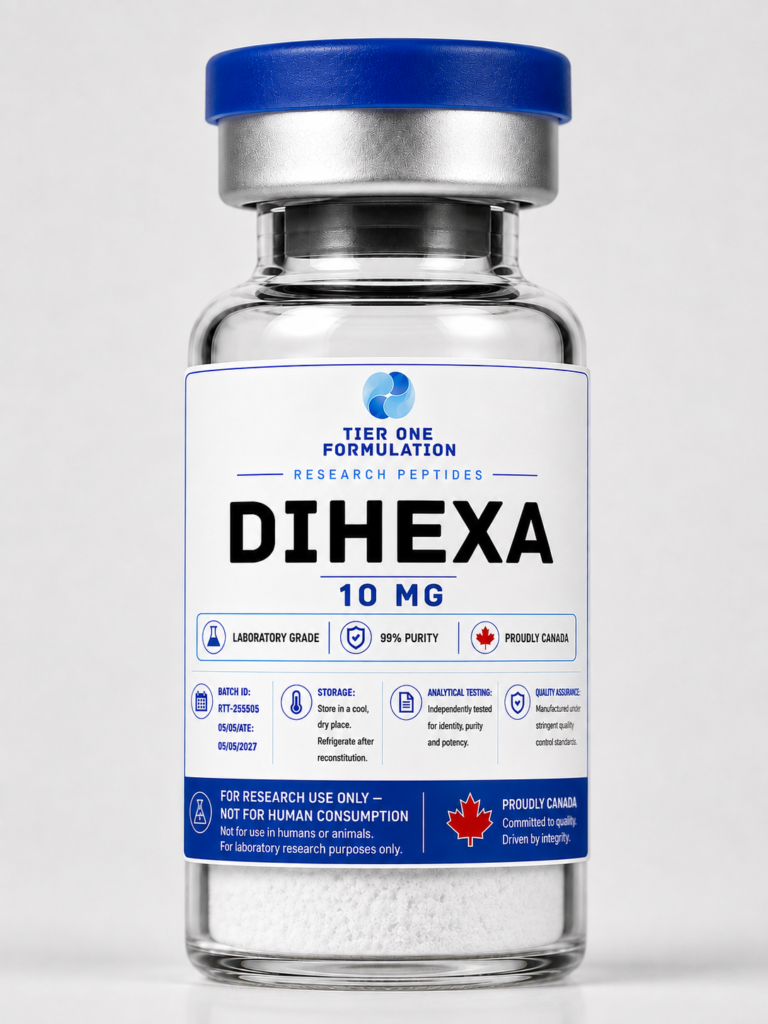
Dihexa Canada: 10mg HGF/c-Met Research Overview
Dihexa 10mg is a Canadian research listing for an angiotensin-IV-derived compound investigated in preclinical neurobiology. Published work associates Dihexa with the hepatocyte growth factor (HGF)/c-Met system and synaptogenesis-related models. Because the evidence base is largely mechanistic and animal-based, the compound is best treated as an experimental research tool rather than as a clinically established cognitive or neurological agent.
Quick Research Profile
| Material |
Dihexa (PNB-0408) |
| Strength |
10mg |
| Research classification |
Angiotensin IV-derived peptidomimetic research compound |
| Primary research pathways |
Hepatocyte growth factor (HGF)/c-Met signalling, synaptogenesis and neurobiology |
| Literature status |
Preclinical mechanistic and animal literature; human clinical evidence for Dihexa itself is lacking |
| Intended use |
Laboratory research only — not for human or veterinary use |
HGF/c-Met Signalling and Synaptogenesis Research
A key mechanistic paper reported that Dihexa binds hepatocyte growth factor and potentiates HGF-dependent activation of its receptor, c-Met. In experimental systems, this interaction was associated with hippocampal spinogenesis and synaptogenesis. These are preclinical mechanistic observations and should not be interpreted as proof of human cognitive effects.
Key Dihexa Research Areas
- HGF/c-Met signalling: Dihexa is studied as a potentiator of hepatocyte-growth-factor signalling.
- Synaptogenesis research: Cell and animal work has examined dendritic-spine and synapse formation.
- Neurobiology models: Preclinical studies have evaluated cognition and neurodegeneration-related models.
Evidence Quality and Interpretation
Published evidence for Dihexa is predominantly preclinical. Mechanistic papers and animal models provide research context, but there is no established clinical evidence base for Dihexa as a therapeutic product.
Research Limitations and Responsible Interpretation
c-Met is involved in broad cellular biology, so pathway findings should be interpreted cautiously. No safety, dosing or therapeutic conclusion can be drawn for humans from these data.
Published findings describe specific experimental preparations and study conditions. They do not establish that a commercial research material is equivalent to a regulated pharmaceutical product, and they should not be interpreted as evidence of safety, efficacy or suitability for personal use.
Scientific References
References are provided for scientific context. Researchers should review the original methods, material identity, model and limitations before using published findings to inform experimental design.
Research FAQ: Dihexa (PNB-0408)
What is Dihexa studied for at the mechanistic level?
Dihexa research is associated with the HGF/c-Met signalling system and with synaptogenesis-related preclinical models. The compound emerged from angiotensin-IV-derived research rather than from an established clinical drug program.
Why does c-Met appear in Dihexa research?
Published mechanistic work connects Dihexa-related compounds with hepatocyte growth factor/c-Met activity, a signalling system involved in cellular growth and synaptic biology.
How strong is the human evidence for Dihexa?
Human clinical evidence is not established. The available literature is predominantly mechanistic, cell-based and animal research.
Does this page claim cognitive or neurological benefits?
No. The product is supplied only as a research compound and no memory, cognition, neuroprotection or treatment outcome is claimed.
Canadian Research Procurement
Tier One supplies Dihexa 10mg for qualified Canadian research procurement. Laboratories working with receptor pharmacology, neuroendocrine and endocrine-signalling models can review the Hormone & Endocrine Peptides collection for related materials. Product-specific identity, purity and analytical statements should be verified from current batch documentation. For research purposes only. Not for human or veterinary use or consumption.